Thursday, January 31, 2013

Sony - SmartWatch


Those that have seen my work around here know that I am a sucker for gimmicks. Not in a bad way, though. What I mean is I love nerding out on new technologies that have potential. A smart watch may not be necessary right now, and these products still need to evolve a bit more, but they can already bring some great functionality to your life.

One of my favorite smart watches is the Sony SmartWatch. Checking your messages, getting notifications, reading your social networks and checking your phone book has never been more convenient! All you have to do is sync this watch to your smartphone via bluetooth and voila. Many of your smartphone features will be accessible right from your wrist.
Oh… and it tells you the time, too. It is now available for almost $50 less than its original price, so you might want to check out Amazon if you are interested!

Wednesday, January 30, 2013

INSTANT PHONE TRANSLATION


Many people wish they could overcome the language barrier and communicate with anyone they please. For years, the dream of a "voice translation device" has been limited to science fiction. But now, Japanese phone technology has finally made the dream come true.
photo
Demonstration of the Phone Translation Service by NTT DOCOMO. The representative on the right speaks in Japanese, while the representative on the left speaks in English.
In order for computers to translate the spoken word, three technologies are required: a voice recognition function that allows them to convert spoken words into text, a machine translation function that translates the text into another language, and a speech synthesis function that converts the text back into audible speech and sends this sound signal to a speaker. Work on these technologies has been steadily progressing around the world. In Japan, NTT and other telecommunications companies as well as university research centers worked to develop a Japanese speech synthesis technology. At the same time, a national project headed by Kyoto University was at work on Japanese-to-English and English-to-Japanese machine translation technology. Both of these efforts resulted in functional technologies in the early 1980s, but it has taken a much longer time to produce a prototype of a "voice translation device." This is because, until lately, the processing speed of a super computer was necessary to realize nearly instantaneous and highly accurate voice recognition.
Integrating Cloud Computing with Cell Phone Technology
photo
A user can view his or her spoken words and their translation on a tablet (left) or smartphone (right).

The world moved one step closer to making the dream of "voice translation devices" practical as we entered the 21st century. In order to perform processing at a speed equivalent to the super computers of the 1990s, the world had to wait for "cloud computing," which allows users to use all their devices—computers, cell phones, or other things—via a connection to a server on the Internet.

In May 2011, NTT DOCOMO announced a Phone Translation Service for smartphones and certain cell phones. It translates the user's words into the language spoken by the person on the other end of the call almost instantaneously. A campaign to recruit users to try out the new system began in November 2011. They were provided with smartphones and cell phones (FOMA phones) and given access to both Japanese and English language services. Translation accuracy is constantly improving, and the new translation service should be available to general cell phone users early in 2012.
photo
Sample screen shot. The words a speaker says are displayed as text, translated, and then transmitted to the listener in his or her own spoken language.
To begin using the service, users press the "begin translation" button on the touch screen and then speak. The spoken words are first displayed on the LCD screen on the speaker's handset. They are then translated and displayed in the language of the person on the other end of the call. Two to three seconds later, the translated text is transferred into sound signals that the other person hears as speech in his or her own language. That person can then answer questions, for example, by speaking in his or her own language. This answer is then converted into written words, translated, and then sent to the other person as a voice signal (text display is only available on smartphones).


Nearly Instant Voice Recognition, Machine Translation, and Speech Synthesis
The phone translation service records the spoken words in the cloud, transposes them to written words, translates the written words, reconverts the translated text into a voice signal, and then sends that voice signal to the other person's handset. The key to the new service was to develop and implement an algorithm able to perform the voice recognition process quickly and accurately. Taking advantage of the widespread use of cloud computing, applications that make it possible for a network computer to translate words spoken into a smartphone have recently been developed. However, for this type of application to work, it must be installed on both users' smartphones. Japan's translation service—which can be used by both smartphones and conventional cell phones—is the first of its kind in the world.

photo
How the Phone Translation Service works: Via the cloud, speech is recorded and processed using voice recognition, machine translation and speech synthesis technology. The translation is then heard on both phones.

Applications That Make Multi-Language Conversations Possible
In October 2011, the National Institute of Information and Communications Technology (NICT) developed an application that allows several people speaking in different languages to converse via smartphone. The application, known as ChaTra, allows up to five people to converse in up to six languages: Japanese, English, Chinese, Korean, Indonesian, and Vietnamese. It utilizes VoiceTra, a speech translation software launched in August 2010.

photo
Screen shots of chats using ChaTra, a translation application developed by NICT. © NICT

NICT is testing speech translation technology in cooperation with research institutes around the world. It is releasing the results of these tests to private companies and the technology is already being used in applications. In December 2011, NICT's speech translation technology was provided to Narita International Airport, which has released it as NariTra, a speech translation application for travelers.
Now you can talk on the phone or participate in conferences with people who speak other languages, make reservations in foreign hotels from home (using the telephone), have a conversation with local people in a foreign cafĂ© (using a face-to-face translation application), or converse in multiple languages using special applications… the possibilities are almost endless. Japanese technology is making the dream of tearing down language barriers between people around the world through the use of translation devices into reality. (January 2012)

Archos 10-inch 101 Titanium


Archos' Titanium line in its Elements series of tablets got a bit bigger with the introduction of a 10-inch model, the 101 Titanium. The tablets shares many common specs with the other Titanium tablets and will be available in March for $199.99.
Like the 7-, 8-, and 9-inch Titanium tablets, the 101 Titanium runs Android 4.1 and houses a 1.6GHz dual-core processor and quad-core graphics processor with 1GB of RAM. The Titanium series tablets also come with 8GB of internal storage, a microSD expansion slot, and micro USB and mini HDMI ports. 
The 10-inch member of the Titanium lineup doesn't reinvent the tablet, but it is more budget friendly than other 10-inchers.

Cameras featured on the tablets vary by model, but the 101 Titanium comes with front and rear cameras.
The 101 Titanium's 1,280x800-pixel resolution IPS display isn't as impressive as the 2,048x1,536-pixel resolution IPS display that the recently announced Archos 97 Titanium HD sports. At 9.7 inches to the 101's 10.1 inches, the 97 Titanium HD isn't much smaller than the 101, and the 97 HD is priced at $50 more. For those uninterested in a super high-definition display, the $199 price for the 10-inch tablet is relatively low and appealing.
For a full review of the Archos 101 Titanium tablet, check back with CNET closer to the product's release date.

Nokia Lumia 900 review - My favorite Windows Phone yet


With its pop-art aesthetic and satisfying specs, the $100 Nokia Lumia 900 for AT&T is the Windows Phone I'd rather use.


After months and months of waiting for the Microsoft-Nokia partnership to bear smartphone fruit here in the U.S., the Nokia Lumia 900 is finally here! I won't say that I couldn't be happier, because I could, but let's just say that I'm very happy with this phone as a mainstream offering that makes Microsoft's Windows Phone portfolio much more exciting, and AT&T's lineup to boot.

I'd like to direct you to the review instead of spilling all the goods here, because the photos are fantastic, the video will show you what you need to know, and the review goes in-depth to answer some of the questions I think you're going to have about the brightness of the screen compared with other similar phones, the way it feels in the hand, and how fast LTE really is.
However, I will tell you here that I think Nokia should be proud of its efforts and that I think a lot of people are going to really like this phone. I happen to be one of them.
No, it isn't the absolute most premium smartphone on the market (in fact, TechRepublic, in a teardown, calls it cheap), and I roll my eyes at the thought of the term "iPhone-killer." (With roughly a 50 percent share of the U.S. market, and Android as the other half, more or less, it's unrealistic to think that a single device on a tertiary platform isgoing to suddenly catch fire. But I digress.)


What it is, is a solid performer with plenty of personality, and ingredients that add up to a handset that showcases Windows Phone OS better than any I've seen so far.

Samsung announces - Galaxy Express 4G smartphone


Samsung has today announced the Galaxy Express, a new 4G LTE smartphone with a large HD screen and NFC. 

The Korean firm is billing the Galaxy Express as a "feature-rich multimedia powerhouse that makes 4G LTE's fast network accessible to everyone".


Designed for the "young social explorer", the smartphone has a 4.5-inch Super AMOLED Plus screen, with a resolution of 480x800 pixels.

Powered by a 1.2 GHz dual-core processor with 1GB of RAM, the device runs Android 4.1 Jelly Bean and has a Li-ion 2,000mAh battery. 

Users get just 8GB of internal memory, although that can be increased to up to 32GB via a microSD card. 

As the phone is NFC-enabled, users can access AllShare Play for remote sharing of content on other Samsung devices, as well as S Beam for transferring movies, photos or music to another S Beam device.

There is a 5MP rear-fitted camera on the Galaxy Express capable of shooting HD 1080p video, along with a 1.3MP front-facing camera.

The Galaxy Express will be available to purchase in the UK in the first half of 2013. Pricing has not yet been announced.


Samsung Galaxy S3 - takes on iTunes with new Music Hub service Read more: http://www.digitalspy.co.uk/tech/news/a384151/samsung-galaxy-s3-takes-on-itunes-with-new-music-hub-service

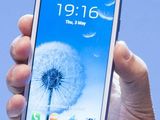
Samsung Galaxy 3 Mobile Phone displayed at the Samsung Galaxy 3 Mobile Phone launch at Earls Court Exhibition Center, London

On the day that the Galaxy S3, Samsung's new flagship smartphone, was released in Germany, the Korean firm has launched its first ever digital music service created right from scratch.

Music Hub will give Galaxy S3 owners access to over 19 million songs on their device. Working similarly to iTunes Match, Music Hub also scans a user's own music library and matches their stored songs with higher quality versions from the store catalogue. 

Initially launching just for the Galaxy S3, the service will be offered in both a free and premium price plan, costing £9.99 per month.

Users of the free service will be able to access the store and listen to 30-second previews of music tracks before deciding whether to make a purchase. 

Premium customers can stream an unlimited number of songs from the library, as well as access to the match service. They can also upload music to be stored on remote, cloud servers and then access it on a PC and up to five mobile devices. 

Samsung hopes to introduce more price tariffs in future, as well as launch the service on its connected TVs and tablets. 

T.J. Kang, the senior vice president of Samsung Electronics' Media Solution Centre, told Reuters: "Samsung is not known for our content services; we make good hardware products but we haven't done much in the content space but that's changing.

"We are doing it to create a better experience for our users. There are things we could do better if we have complete control over all of the service."

Alongside the store and match aspects, Music Hub also allows Samsung consumers to make recommendations to others, create personalised radio stations and access a web-based player for listening to music on PC. 

Kang said that Samsung hopes to build an app for Apple's iOS devices in the future so that people can access Music Hub on their iPhone. 

Samsung's Music Hub will compete with rival music stores on its Android-powered Galaxy S3, including services from Google and Amazon, along with the likes of Spotify and Deezer.

However, Samsung feels that the combination of music locker, store and personalised radio service makes Music Hub a unique consumer offering.

Daren Tsui, the chief executive of mSpot, the Samsung subsidiary behind the streaming aspect of Music Hub, said: "We believe that today's mobile market must have an open mobile music system - one that offers all kinds of services across different devices. Music Hub removes all the barriers to your music."


Microsoft's 64GB Surface Pro will only have 23GB usable storage


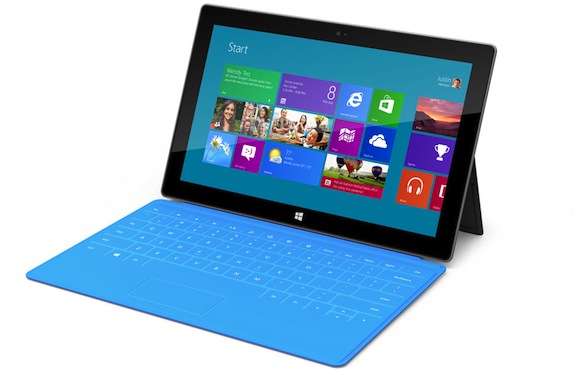
Microsoft's Surface Pro tablet, due on February 9th, will have a smaller amount of storage space than expected. A company spokesperson has confirmed to The Verge that the 64GB edition of Surface Pro will have 23GB of free storage out of the box. The 128GB model will have 83GB of free storage. It appears that the Windows 8 install, built-in apps, and a recovery partition will make up the 41GB total on the base Surface Pro model.
Microsoft says users will be able to free up additional storage space by "creating a backup bootable USB and deleting the recovery partition," but out of the box they'll be left with as little as 36 percent of the advertised storage available. The storage situation issimilar to Microsoft's Surface RT tablet. The Windows RT operating system, that powers Surface RT, accounts for half of the 32GB disk space on the entry model. Microsoft's Surface Pro supports USB 3.0 hard drives and microSDXC cards, meaning there are ways to extend the storage.